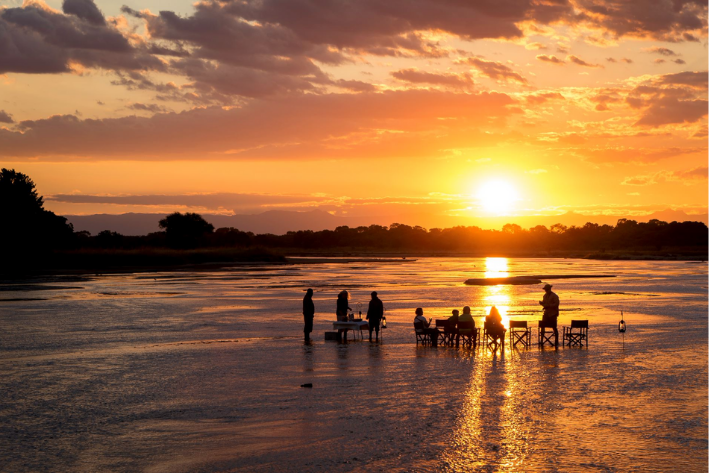
The Ultimate Guide to Safaris in Botswana
From the crystal channels of the Okavango Delta and the great elephant herds of the Selinda to the elemental silence of the Makgadikgadi Pans. A complete expert guide to planning a luxury safari in Botswana with Stanley Safaris.
In a nutshell:
- Botswana is one of Africa’s most exclusive safari destinations by design: the government’s high-value, low-volume tourism policy means fewer guests, larger wilderness areas, and an experience that has no equivalent on the continent
- We design safaris around private concessions, not national parks. The difference: night drives, walking safaris, off-road access, and a maximum of three vehicles at any sighting, as standard
- The Okavango Delta is the iconic centrepiece, but Botswana is far more than one destination: the Selinda and Kwando concessions of the wild north, and the ancient salt pans of the Makgadikgadi, are each a complete and extraordinary experience in their own right
- Stanley Safaris Botswana itineraries are quoted on a fully inclusive in-country basis; average pricing is around USD $2,000 per person per night during peak season; most itineraries run 10–14 nights and combine beautifully with a Seychelles or Mozambique beach extension
By Shaun Stanley | Stanley Safaris | Updated June 2026
T&L A-List Safari Expert 2024, 2025 & 2026 | Condé Nast Traveller Expert 2026
My first experience of Botswana was in 1991. I was twelve years old, two years after my family’s first Namibia trip, and we drove from Durban, a Land Rover loaded with a group of family and friends, all the way north through the Makgadikgadi, into Maun, through Moremi, Kasane, and up into Chobe before looping back. It was a long, dusty, extraordinary journey. But the moment that has stayed with me for thirty-five years happened in the Okavango Delta.
From Maun, we organised a speedboat to a village at the edge of the Delta. From there, the men of the village poled us deeper into the floodplains by mokoro: dugout canoes, sitting almost at water level, moving through channels so clear you could see every reed and papyrus root below the surface. We loaded everything ourselves: tents, food, water, sleeping gear. Everything we would need for three nights. We found an island. We set up camp. No lodge, no staff, no fences. Just the Delta and everything living in it.
One night, we heard elephants crossing between islands: the sound of water moving under large bodies, somewhere in the dark. The next morning, we got into the mokoros and poled towards where we thought they had gone. When the water became too shallow, we got out and walked. Knee-deep in the floodplains (crocodiles, hippos, lions, elephants all present in that landscape), we tracked that herd on foot for several hours. We had no rifle. We had no professional guide. We had the men from the village, who knew this water the way most people know their own street.
When we finally found the elephants, they were deep in island forest. None of us saw the others until the very last moment. They turned and ran. We froze, except for the village men, who also turned and ran. And we stood there in the water, hearts loud, watching them go.
That experience (raw, unmediated, genuinely wild) is what Botswana has always meant to me. Everything I have built at Stanley Safaris around this destination traces back to that island.
Why Botswana for a Safari?

Botswana made a deliberate choice. While other African countries pursued volume tourism (more beds, more camps, more visitors), Botswana went the other way. The government’s high-value, low-volume tourism policy restricts the number of beds permitted per concession area, caps visitor numbers in wilderness zones, and charges conservation levies that fund the protection of the land itself. The result is a wilderness experience that is structurally different from anywhere else on the continent.
To understand what that means in practice, consider this: the Selinda Conservancy covers 1,350 square kilometres, larger than New York City, which occupies 1,213 square kilometres. The Selinda has 42 beds across its camps. At any given moment, the equivalent of a single apartment building’s worth of guests has access to a wilderness larger than one of the world’s great cities. That is not a marketing claim. That is the arithmetic of Botswana’s tourism model.
At Stanley Safaris, we work exclusively within private concessions. We do not send guests to Chobe National Park, Moremi, Khwai, or the Kasane riverfront, not because these areas lack wildlife, but because a national park imposes constraints that fundamentally limit the experience. In a national park, any operator with a permit can drive there. There is no limit on vehicles at a sighting. Off-road driving is prohibited. Night drives are prohibited. You are confined to the road from sunrise to sunset.
In a private concession, only the camps within that specific area operate there. The maximum at any sighting is typically three vehicles: often one, often none. You can drive off-road, do night drives, walk, mokoro, boat. The wildlife is the same. There are no fences between concessions and parks, and animals move freely. But the experience is categorically different.
Botswana is also more than the Okavango Delta. Most people who write about this country focus almost entirely on one region. In reality, the Selinda and Kwando concessions of the wild north offer a completely different, and in some respects more intense, predator experience. The Makgadikgadi Pans are unlike any other landscape in Africa: ancient, elemental, and home to experiences that exist nowhere else. A Botswana safari that visits only the Delta is, in our view, an incomplete one.
The Okavango Delta: Africa’s Greatest Wilderness

Every year, rain falls on the Angolan highlands, hundreds of kilometres away, in a country that borders Botswana only distantly to the northwest. That rain flows south and east through the Kavango River, crosses the Caprivi Strip of Namibia, and arrives in Botswana as a slow, vast flood that takes months to travel the full distance. When it arrives, it transforms a semi-arid landscape into something that has no parallel on earth: an inland delta the size of Switzerland, a mosaic of permanent channels, seasonal floodplains, palm-fringed islands, and open lagoons, sitting in the middle of the Kalahari Desert.
The Okavango Delta is a UNESCO World Heritage Site, designated for its outstanding universal value as a unique inland delta ecosystem. More than 1,000 species of plants, 130 species of mammals, and 480 species of birds have been recorded here.
The Private Concession Model in the Delta
The Delta is divided between national park areas (Moremi Game Reserve) and private concessions that surround and adjoin it. The private concessions are where Stanley Safaris operates exclusively. Each concession is leased from the government, and the camps within it have sole access to that area. The exclusivity is not a luxury add-on. It is the structure of the experience.
The water in the Okavango is extraordinary: genuinely crystal clear in the permanent channels, filtered through the papyrus reed beds that line the banks. You can see the bottom. The palm islands rise a metre or two above the waterline, dense with fig trees, sycamores, and the occasional leopard watching from the branches. The floodplains between islands are where the game concentrates during the flood season: red lechwe, tsessebe, and impala grazing the fresh grasses as the water recedes; lion moving along the island edges at dusk.
The Mokoro Experience
There is no experience in African safari quite like a mokoro. The dugout canoe sits almost at the waterline. Your poler stands at the back, pushing silently through channels sometimes barely wider than the boat itself. The perspective is completely different from a vehicle: you are at the level of the water, not above it. You see the frog on the lily pad, the jacana walking on the surface, the fish eagle lifting from its perch twenty metres away. Animals that move at the sound of an engine approach a silent mokoro with curiosity.
The mokoro experience is season-dependent. Peak flood season (April through July) is when water levels are at their highest and the floodplains are navigable by boat as well as the main channels. By late September and October, water levels have receded in many areas, concentrating wildlife on the remaining water sources and making land game drives equally productive.
Fly-In Logistics
There are no roads into the private concessions of the Okavango Delta. Access is exclusively by light aircraft: a short charter flight from Maun, Botswana’s safari hub, which is connected via daily scheduled flights from Johannesburg O.R. Tambo International Airport. The flight from Maun to a Delta camp is typically fifteen to thirty minutes. From the air, the transition from dry Kalahari scrub to the green and blue mosaic of the Delta is immediate and extraordinary.
Stanley Safaris handles every domestic connection, so guests arrive in Maun and find their charter aircraft waiting. The airstrip at the other end is typically a grass strip on a private island, with a camp vehicle (or a mokoro) waiting to transfer guests the final distance.
Wildlife in the Okavango Delta
Botswana is exceptional for four of the Big Five (lion, leopard, elephant, and buffalo) in numbers and consistency that few destinations anywhere in Africa can match. Rhino is the exception: populations are limited, and reliable rhino sightings require going to specific properties. Duba Plains is the primary option.
For elephant, the Delta is genuinely extraordinary. Herds move freely between islands, crossing channels in long, silent lines. Lion and leopard are well distributed across the private concessions. Wild dog maintain strong populations in both the Delta and the Selinda and Kwando concessions to the north. Hippo are ubiquitous in the permanent channels; crocodile equally so. The birdlife is extraordinary (carmine bee-eaters, African fish eagles, saddle-billed storks, malachite kingfishers), and the Delta is considered one of Africa’s premier birding destinations.
Stanley Safaris’ Okavango Delta Partner Camps

Kanana
Okavango Delta: private concession, Xudum River system
Set between several islands deep in the heart of the Delta, Kanana is a well-established camp with access to beautiful permanent water channels and productive land game areas. The combination of water and land activities here is genuinely balanced: guests can mokoro in the morning, game drive in the afternoon, and the wildlife on both is consistently strong. Great guiding, an excellent location, and a camp that delivers a thorough Delta experience.
Best for: Guests wanting a complete introduction to the Okavango Delta across both its water and land dimensions.
Shinde
Northern Okavango Delta: same operator as Kanana
Shinde sits on the northern edge of the Delta, and that positioning is significant: access to deep permanent water channels means boating is available throughout the year, regardless of seasonal fluctuations in the floodplains further south. The land to the north of the camp extends into excellent game country, giving Shinde the rare ability to offer land game drives, walking, water activities, boating, and helicopter flights from one base. For a guest who wants the full spectrum of the Delta experience without moving camps, Shinde is the closest thing to a one-stop shop the Okavango offers. Shinde and Kanana combine well together.
Best for: Guests wanting maximum activity variety from a single camp; families with mixed interests.

Tuludi
Khwai Private Reserve: premium property on the reserve

Tuludi is a high-end luxury camp in the Khwai Private Reserve, a beautiful, privately managed area in the eastern Delta with exceptional game viewing. The architecture is distinctive: elevated treehouse-style suites built into the island canopy, with sweeping views across the surrounding floodplains. Predator sightings here are consistently strong (good lion, good leopard, occasional cheetah moving through), and the camp is primarily land-based, though water activities are available at certain times of year.
Best for: Design-conscious travellers and photography-focused guests; honeymooners wanting a visually distinctive camp.
Sable Alley
Khwai Private Reserve: mid-to-premium tier
Sable Alley sits within the Khwai Private Reserve, the same wildlife area as Tuludi, with the same access to strong predator numbers and diverse general game. A mid-range camp with a strong reputation for guiding and a genuinely comfortable safari experience. In terms of the Khwai budget hierarchy: Sable Alley sits below Tuludi but above Little Sable; the wildlife access is consistent across all three.
Best for: Couples and small groups wanting reliable quality at a mid-range price point within one of the Delta’s most productive concessions.
The Jao Concession: Jao, Kwetsani, Tubu Tree & Little Tubu
The Jao Concession is one of the most beautiful areas in the entire Okavango Delta, a large private concession with an extraordinary mix of permanent channels, open floodplains, and palm island forest. Until recently, Jao and its sister camps were managed and marketed by Wilderness Safaris. They have now separated from that arrangement and are operating independently, which is precisely why they have joined our partner list.
Jao
Jao Concession flagship: ultra-luxury
Architecturally beautiful camp set in the treeline of an island overlooking a permanent river. During the flood season (May through early August), the surrounding floodplains fill with water, creating a quintessentially Okavango landscape. The villas are elevated and spacious. Access to Hynde Island provides excellent land game viewing: good lion, leopard, and wild dog alongside strong general game. As the floods recede, the grasslands draw red lechwe and tsessebe onto the plains.
Best for: Honeymooners and design-conscious travellers wanting the Delta’s most visually striking camp. Pairs well with Tuludi for a complete Khwai-plus-Jao Concession itinerary.
Kwetsani
Jao Concession: intimate mid-range treehouse camp
Set within the same Jao Concession floodplain landscape as Jao, with the same wildlife access and seasonal character. Kwetsani is more intimate and more mid-range than the flagship camp. The elevated treehouse-style design makes the most of the floodplain views. The distinction between Kwetsani and Jao is primarily one of budget and scale rather than experience quality.
Best for: Guests seeking intimacy and value within one of the Delta’s finest concessions. Pairs well with Sable Alley.
Tubu Tree
Jao Concession: classic mid-range
Classic Delta camp within the Jao Concession, smaller, quieter, and more pared-back than Jao or Kwetsani. The same extraordinary floodplain landscape and wildlife access, at the most accessible price point within the concession.
Best for: Guests seeking the Jao Concession experience at a more accessible budget. Pairs well with Sable Alley.
Little Tubu
Jao Concession: exclusive-use
The exclusive-use option within the Jao Concession. A family or small group has the camp, the vehicle, and the guide to themselves, with the full Jao Concession floodplain landscape as their private wilderness.
Best for: Families and small groups wanting exclusive use within the Jao Concession.
Duba Plains
Private Duba Concession: Great Plains Conservation

The Duba Plains Concession is unlike anywhere else in the Okavango Delta. Where most of the Delta is dense with islands and papyrus channels, Duba is more open: great grassland plains cut through by river channels, the sky enormous above you. You cross between islands over bridges or drive through water, which gives game driving an adventure quality quite different from the rest of the Delta. Duba became famous through the National Geographic wildlife documentaries made here by Dereck and Beverly Joubert, films that captured the extraordinary relationship between a pride of lions that had specialised in hunting buffalo in the water. Those specific hunting dynamics have changed over time, but Duba remains exceptional for lion and large herds of buffalo. Great Plains Conservation was also involved in relocating white rhino from South Africa into Botswana during the peak of the poaching crisis, a conservation initiative that brought the animals onto the Duba Concession, where they remain today. This makes Duba one of the only camps in the Delta where guests can encounter all four reliably-sighted members of the Big Five alongside a genuine rhino conservation story.
Best for: Wildlife enthusiasts wanting the most complete Big Five experience the Delta offers; photography-focused guests; guests with a specific interest in lion behaviour and conservation history.
Atzaro Okavango
Private concession: managed and guided by African Bush Camps
Atzaro Okavango is a privately owned property managed and guided on the ground by African Bush Camps, a team with a strong reputation for guiding quality, conservation, and community work. The camp is set in a productive wildlife area with primarily land-based game viewing. Its real point of distinction is a serious commitment to wellness: a beautiful spa, excellent gym facilities, and a wellness programme genuinely integrated into the camp design rather than added as an afterthought.
Best for: Guests who want to combine strong game viewing with a meaningful wellness dimension.
Sitatunga Island
Private island: Great Plains Conservation
A Great Plains Conservation property set on an exclusive private island in the Delta. The camp’s positioning on deep permanent water channels means water-based activities are available throughout the year, regardless of seasonal fluctuation. The island exclusivity means guests share the concession with no other properties.
Best for: Honeymooners and couples wanting complete island privacy with reliable year-round water activities.
Selinda, Kwando and the Wild North

North and east of the Delta, beyond the reach of most Botswana safari itineraries, lies a region that serious safari travellers increasingly recognise as the country’s most compelling predator country. The Selinda Concession, the Kwando Concession, and the wilderness between them form a private reserve system of extraordinary scale: unfenced, contiguous with the Delta to the west and the Chobe ecosystem to the north, and carrying wildlife densities that in certain seasons rival anything Africa offers.
The Selinda Reserve
The Selinda Concession covers 1,350 square kilometres of northern Botswana, larger than New York City. At any given moment, it permits 42 guests across its camps. The Selinda Spillway, a seasonal waterway that connects the Okavango Delta system to the Kwando river system, runs through the heart of the concession, and in good water years fills to create a remarkable linear oasis through the mopane woodland.
Selinda is primarily land-based (game drives, walking safaris, and night drives), with predator sightings that are consistently exceptional. Lion and leopard are well established; wild dog den within the concession; buffalo herds move through in large numbers. It is the kind of wilderness where your guide can take the vehicle off any track, follow a wild dog pack across open ground, and position for a sighting without a single other vehicle in sight.
The Kwando Concession
Where Selinda’s character is defined by its mopane woodland and the Spillway, Kwando’s strength lies in its habitat diversity. The Kwando Concession runs from the remote northern section along the Namibian border all the way south to where it borders the Okavango Delta. That diversity of habitat produces a diversity of wildlife year-round that most single-habitat areas cannot match.
Kwando Lagoon, in the northern section of the concession, is for my money one of the best all-round safari camps in Botswana. The predator sightings are exceptional, and wild dog in particular.
Packs den close to the camp regularly, and because the prey base is strong across the varied habitats, the dogs are resident rather than transient. Lion, leopard, and cheetah are all present; general game is diverse and plentiful.
The later in the dry season you go, the more concentrated the game becomes along the river systems: June and July see conditions begin to peak; August, September, and October are the months when massive herds of elephant and buffalo converge on the permanent water, and predator activity intensifies accordingly.
Who is Selinda and Kwando Right For?
These concessions suit a guest who has either done the Delta before and wants to go deeper into Botswana’s wilderness, or a guest more interested in classic land-based game viewing than in the water-focused Delta experience. The Delta is one of the world’s great wildlife destinations, but it is also a mixed experience: part game viewing, part water activity. Selinda and Kwando are more purely focused on wildlife and predators. The combination of both in one itinerary (Delta water activities and island scenery, followed by the wild north’s predator intensity) is one of the great Botswana safari structures.
Stanley Safaris’ Wild North Partner Camps

Selinda Camp
Selinda Reserve: Great Plains Conservation
The classic Great Plains property within the Selinda Reserve: comfortable, well-run, and positioned on the Selinda Spillway with excellent land-based game viewing. Private plunge pools, attentive service, and access to the full range of activities the concession offers: game drives, night drives, and walking safaris.
Best for: Guests wanting a premium but not ultra-luxury experience within the Selinda Reserve; experienced safari travellers.
Zarafa Camp
Selinda Reserve flagship: Great Plains Conservation, ultra-luxury
The flagship ultra-luxury offering within the Selinda Reserve: one of Botswana’s most exclusive properties, with huge, tented suites, private plunge pools, exceptional food, and guiding that matches the scale of the surroundings. The service levels are remarkable, and the concession access is identical to Selinda Camp.
Best for: Honeymooners; guests for whom luxury and wilderness need to be inseparable.
Selinda Explorers
Selinda Reserve: explorer/mobile camp, Great Plains Conservation
An authentic on-the-ground explorer camp within the Selinda Reserve, focused primarily on walking safaris and genuine immersion in the bush. More stripped-back by design: this is adventure luxury rather than plunge-pool luxury, and deliberately so. The combination that works especially well is Selinda Explorers for two nights of walking and expedition-style safari, followed by Zarafa or Selinda Camp for the premium lodge experience.
Best for: Adventurous guests who want the walking safari experience alongside, rather than instead of, a luxury camp.
Kwando Lagoon
Kwando Concession: northern section, Namibian border
Set in the northern section of the Kwando Concession, overlooking the Kwando River along the Namibian border. Outstanding predator sightings year-round, with wild dog a particular speciality, and the game concentration during peak dry season (August–October) that makes the northern river systems so compelling.
Best for: Serious safari guests prioritising predator sightings and game density; experienced travellers who want the most intense wildlife experience the wild north offers.
Splash Camp
Kwando Concession: southern section, bordering the Okavango Delta
Occupies the southern section of the Kwando Concession, where it borders the Okavango Delta. As a result, it offers something Kwando Lagoon cannot: a genuine combination of land game driving and Delta-style water activities. Mokoro, boating, and traditional floodplain water experiences are available alongside the predator-rich game drives that define the Kwando Concession.
Best for: Guests wanting both water and land activities within the Kwando Concession.
Kwara Camp
Kwando Concession: southern section, adults only (18+)
Positioned within the southern section of the Kwando Concession, adjacent to both the Okavango and the Kwando systems, with access to deep permanent water channels that allow boating throughout the year. Kwara accepts guests aged eighteen and above only: genuinely private, extremely comfortable, with good leopard, wild dog, and occasional cheetah.
Best for: Honeymooners and couples wanting seclusion, strong game viewing, and reliable water activities in a no-children environment.
Karangoma
Northern Okavango / Selinda–Kwando boundary: Wild Expeditions
A relatively recently opened camp on a concession that occupies what was previously a marginal buffer zone between elephant corridors and community cattle land. The operator, Wild Expeditions, is doing serious conservation and community work here: working with local communities to alleviate human-wildlife conflict and open the concession to wildlife. We know the Wild Expeditions team well from their properties in Hwange and Madagascar; their integrity and commitment are not in question. The concession has access to land and water activities and sits at the northern Okavango–Kwando boundary, representing genuine value relative to its neighbours.
Best for: Guests looking for an excellent value option in the wild north who also want to support genuinely meaningful conservation work at its beginning.
Makgadikgadi Pans: Africa’s Great Empty

Drive south and east from the Okavango Delta for several hours, and the landscape transforms completely. The trees thin out. The ground flattens. The horizon extends further than feels natural. And then the trees disappear entirely, and you are standing on the edge of something that makes no immediate sense: a flat, white, apparently infinite expanse of ancient salt pan, shimmering in the heat.
The Makgadikgadi Pans are the remnants of a vast prehistoric lake that once covered much of northern Botswana, a body of water larger than the Caspian Sea, which dried out over millennia and left behind one of the world’s great stretches of salt pan. The pans collectively cover an area roughly the size of Switzerland. The scale is disorientating in the most extraordinary way.
I have been to the Makgadikgadi many times, and it still does something to me. There is a quality of silence and emptiness here that you cannot prepare for. At night, with no moon, the stars are so bright they cast shadows on the ground. I have slept out on the pans on more than one occasion, and it remains one of the most disorienting and quietly profound experiences I have had anywhere in Africa.
Two Seasons, Two Experiences
The Makgadikgadi reveals itself differently depending on when you visit, and both versions are compelling.
The dry season (roughly May through October) is when the pans are accessible by vehicle: hard, cracked, navigable. Quad biking across the salt surface is one of the signature experiences here, covering ground in vast open silence with nothing but the horizon ahead. The meerkat colony associated with the camps is active year-round: these animals are completely wild but fully habituated to humans. A meerkat standing on your head using you as a lookout point while its family forages around your feet is not an experience available anywhere else on any safari circuit.
The wet season (roughly November through April) brings a different Makgadikgadi. Rain falls on the surrounding grasslands, and the grasses sprout and become nutritious, attracting one of Africa’s great wildlife spectacles. The Makgadikgadi sees southern Africa’s longest land mammal migration: an estimated 20,000 to 30,000 zebra travelling from the Okavango Delta, the Kwando, and the Chobe River systems down into the Nxai Pan and Makgadikgadi area, with large herds of wildebeest moving with them.
The transition from a Delta trip to the Makgadikgadi is one of the great contrasts available anywhere in African travel. From crystal water channels, palm islands, and dense green vegetation to the white silence of the ancient salt pan: the same country, the same trip, two completely different planets.
A Cultural Experience Unlike Any Other
One of the aspects of the Makgadikgadi that most safari guides overlook is the cultural dimension. The camps in this area work with local San Bushman families, and guests can spend several hours with Bushman guides learning how people have lived in this environment for thousands of years: how to find water in a landscape that appears to have none, which plants are edible and which are medicinal, how to track and hunt. It is one of the few genuinely authentic cultural encounters available in southern Africa, and it has nothing to do with performance. These families live in this landscape.
Stanley Safaris’ Makgadikgadi Partner Camps
Makgadikgadi Pans Private Conservancy: Ralph Bousfield / Natural Selection

Jacks Camp & Jacks Private
The flagship properties in the Makgadikgadi, owned and operated by Ralph Bousfield, an icon in Botswana conservation and guiding. Positioned right on the edge of the pans, Jacks offers the full range of Makgadikgadi experiences: the habituated meerkat colony, quad biking on the pans, the San Bushman cultural experience, sleep-outs under the stars, and seasonal game viewing including lion and cheetah. The sleep-out experience, beds set up directly on the pan surface after dinner under the stars, is one of the most extraordinary things I have done in Africa. On a moonless night, the stars are so bright they cast shadows on the ground. Jacks Private is the ultra-luxury exclusive-use configuration within the same concession.
Best for: Guests wanting the complete, immersive Makgadikgadi experience with no compromises.
San Camp
Makgadikgadi Pans Private Conservancy: Ralph Bousfield / Natural Selection
San Camp takes its name from the San people, the indigenous Bushmen of southern Africa whose ancestral territory includes the Makgadikgadi region. Sits within the same private conservancy as Jacks, but on the pans themselves rather than the edge, a more intimate tented camp with a quieter character. Because it is positioned on the pan surface, San Camp is seasonal: set up during the dry months when the pans are accessible, packed down when the rains arrive. The experience is more pared-back than Jacks: smaller, quieter, and designed for guests who want the essence of the Makgadikgadi without the fuller programme of the flagship. The San Bushmen cultural experience available through Ralph Bousfield’s camps is one of the most authentic of its kind in southern Africa.
Best for: Couples and honeymooners wanting an intimate, stripped-back experience directly on the pans.
Camp Kalahari
Makgadikgadi Pans Private Conservancy: Ralph Bousfield / Natural Selection
The more accessible entry point to the Makgadikgadi, a beautiful, tented camp set in the grasslands surrounding the pans. Specifically designed with families in mind and the natural recommendation for guests travelling with children who want to experience the Makgadikgadi without the more remote intensity of Jacks. The wildlife here (lion, cheetah, oryx, springbok, hartebeest, brown hyena) is distinctive and often overlooked by guests who have only visited the Delta.
Best for: Families and guests wanting a comfortable introduction to the Makgadikgadi at a more accessible price point.
Wild Camping in the Okavango Delta: Safari Beyond the Lodge

In 1991, I wild camped on an island in the Okavango Delta with my family and a group of friends. We had no professional guide, no lodge infrastructure, no plan beyond finding an island and setting up tents. We poled in by mokoro with the men from a village at the Delta’s edge, carrying everything ourselves. We woke to hippo calls in the dark and went to sleep under stars that felt closer than they had any right to be. We tracked elephants on foot through knee-deep water with nothing but our nerve and the knowledge of the village men who had grown up in this landscape.
That experience has shaped everything about how I think a Botswana safari should feel. Not the luxury of beautiful rooms: the luxury of genuine immersion.
For many years, the only way to access that kind of experience was to do what we did in 1991: organise it yourself, take the risks, and accept that it was beyond the scope of what most safari operators could or would offer. That has changed with Beagle Expeditions.
Beagle Expeditions
Beagle Expeditions is Stanley Safaris’ trusted partner for wild camping in the Okavango Delta. The reason I recommend them without hesitation is that what Simon and his team offer is not a packaged approximation of the experience I had in 1991. It is that experience, delivered with the skill and logistical backbone that comes from years of operating in this specific wilderness.
The Beagle experience is a four-night expedition, moving between two locations within a private Delta concession. The camp is authentic and on-the-ground: this is not glamping, but it is not roughing it either. It is the real Delta: sleeping close to the ground, waking to whatever was moving through during the night, with no schedule beyond what the wilderness dictates. If the wild dogs are denning nearby, you track wild dogs. If there are fresh elephant tracks at the waterline, you follow them. The itinerary is entirely fluid, shaped by what the concession is doing on any given day.
Game drives, walking safaris, and helicopter flights from the concession are all available, but the heart of the Beagle experience is on foot and by mokoro, moving through the Delta at the pace of the water.
How We Combine It
The combination that works exceptionally well is Beagle Expeditions followed by a premium lodge: Jao, Duba Plains, or one of the Selinda camps. Guests arrive at the lodge having already experienced the Delta at its most raw and immersive; the transition to genuine luxury feels earned rather than simply expensive. The contrast is deliberate and it deepens both experiences. This is what we mean by adventure luxury, not one or the other, but the full arc.
Wild camping in the Delta is not for every guest. It requires a genuine appetite for immersion, a reasonable level of physical comfort with outdoor conditions, and a willingness to accept that the wilderness sets the agenda. For the right guest (and they are some of our most enthusiastic clients), it is the best four nights they have ever spent anywhere.
Signature Botswana Safari Experiences

The Panhandle-to-Floodplains Helicopter Flight
This is the experience I include in almost every Botswana itinerary, and I do not hesitate to call it essential. Helicopter Horizons is the sole helicopter operator in Botswana. Their team knows this landscape from the air as well as anyone on the ground.
The flight departs from your camp or lodge, travels north to the Okavango Panhandle (where the river enters Botswana as a single, defined channel), and then follows it south as it fans out and fragments into the infinite mosaic of islands, channels, and floodplains that constitute the Delta. You land on an island somewhere in the middle for a drink or a picnic, and then continue the flight back to camp.
The aircraft flies doors-off: unobstructed views, open air, the sound of the rotor above and the Delta below. From altitude, you understand the scale of what you have been moving through on the ground: the full breadth and length of an inland sea, viewed from above, in private. Buffalo herds visible from the air, elephants crossing between islands, hippos in the channels, the occasional lion or cheetah spotted from altitude. And the photography (the light, the angles, the unrepeatable aerial perspectives) is extraordinary.
Helicopter Horizons also offers flights over the Makgadikgadi Pans: down to Sua Pan, across to Kubu Island with its ancient baobabs, and during the wet season, potentially over the zebra migration itself.
Mokoro Safari
At water level in a traditional dugout canoe, pushed silently through channels lined with papyrus by a poler who has known this water since childhood, the mokoro experience is specific to the Okavango and unlike anything available elsewhere in African safari. Season-dependent; peak flood April–July offers the most extensive water access.
Walking Safari
On foot, everything changes. The guide relationship becomes closer, the pace drops, and the senses engage differently. Walking safaris in the Selinda Reserve and through the Kwando Concession, led by trackers who read the ground the way others read a map, produce encounters that a vehicle cannot replicate.
Horseback Safari
Macatoo Camp operates horseback safaris through the Okavango Delta, one of a very small number of operators offering riding in this landscape. Animals that move at the approach of a vehicle will often allow a horse to come considerably closer; the experience of moving through the Delta on horseback, at the pace and height of a large mammal, is quite different from any other mode of safari.
Night Drives
After dark, Botswana’s private concessions reveal a completely different cast of characters. Aardvark, honey badger, serval, civet, and the various owl and nightjar species that are invisible during daylight hours. The predators that were resting during the afternoon heat are now moving. Night drives are prohibited inside Botswana’s national parks; in the private concessions, they are standard.
Photographic Safari
The private concession model (off-road access, limited vehicles, unhurried time at sightings) makes Botswana one of Africa’s premier photographic safari destinations. The light in the Delta at flood season, the dust in the Selinda at peak dry season, and the extraordinary skies of the Makgadikgadi at any time of year produce images specific to this landscape. Most Stanley Safaris Botswana itineraries include a private guide, which means the vehicle is positioned for photography rather than for the convenience of a shared group.
Botswana Honeymoon Safari: The Most Private Place on Earth

Botswana’s combination of extraordinary wildlife, vast private wilderness, intimate camp configurations, and the complete absence of crowds makes it one of the world’s great honeymoon destinations. Not in a resort sense: in the sense that two people can feel genuinely alone in a landscape of irreducible beauty.
The private concession model is the foundation. When only the camps within your concession can operate there, you are not sharing your wilderness with anyone who did not choose the same camp. At many Delta properties, a couple can spend an entire game drive without seeing another vehicle. A private mokoro at sunset, moving silently through channels lit gold by the late sun, with a fish eagle calling somewhere ahead. This is not manufactured romance. It is simply what the Delta looks like in the late afternoon.
Why Botswana Works for a Honeymoon
The exclusivity is structural. The intimacy of small camps (most Stanley Safaris partner properties have between eight and twelve rooms) means guests are known by name within hours of arrival. The all-inclusive model means no decisions about cost; everything is covered and the focus is entirely on experience. And the sheer remoteness (fly-in access, no roads, the nearest town hours away by air) creates a quality of disconnection from ordinary life that few destinations can match.
For honeymoon-specific configurations, several of our partner camps offer particular advantages:
- Kwara Camp: adults-only (eighteen and above), deep water channels for year-round boating, strong game viewing, and the genuine remoteness of the southern Kwando Concession. One of our most trusted honeymoon recommendations.
- Zarafa Camp (Selinda Reserve): for honeymooners who want ultra-luxury in the wild north; large private tented suites, plunge pools, exceptional food, and the predator intensity of the Selinda Concession.
Exclusive-Use Safari Camps in Botswana
For guests who want Botswana entirely to themselves, exclusive-use safari camps in Botswana offer the most secluded safari lodges available anywhere in Africa. Exclusive use means exactly that: a couple, family, or small group takes the entire camp (every room, the vehicle, the guide, and the team), with no other guests present. You set the schedule, choose the activities, and share your sightings with no one. In a destination already defined by low guest numbers, exclusive use takes the privacy to a different level entirely.
The exclusive-use properties we recommend for couples and honeymooners in Botswana: Little Sable in the Khwai Private Reserve, an intimate camp with its own vehicle and guide in one of the Delta’s most productive wildlife concessions. Little Tubu on the Jao Concession, exclusive-use access to the extraordinary floodplain landscape of the Jao Concession, with the full range of Delta water and land activities. Sitatunga Island, a Great Plains Conservation property on a private island in the Delta, with deep permanent water channels that allow boating year-round; the island exclusivity means no other camps share the concession. For the wild north, Zarafa Camp in the Selinda Reserve offers exclusive-use configuration within one of Botswana’s most remote and predator-rich landscapes. These are the most secluded safari lodges in Botswana, each offering complete privacy without compromising the quality of guiding or wilderness access.
Combining Botswana with the Indian Ocean
A Botswana honeymoon combines naturally with an Indian Ocean island extension. Getting from Botswana to the coast requires an overnight in Johannesburg, a natural pause between the wilderness and the beach, before flying on to the Seychelles or Mozambique. Both are within easy reach of Johannesburg and offer a complete shift of pace: from the raw wilderness of the Delta or the wild north to the crystal water and white sand of the Indian Ocean.
Family Safari in Botswana: Built Around Your Family, Not Ours

Botswana is an outstanding family safari destination, but it requires more planning than most: specifically around minimum age policies, which vary by camp and activity, and around the nature of the experience itself. Getting this right is the difference between a trip that transforms a family and one that over-reaches.
Why Botswana Works for Families
The private guide model is the foundation. In a Stanley Safaris Botswana itinerary, your family has its own vehicle and its own guide. The pace of the safari is set by your family’s interests and energy levels, not by the compromise of a shared vehicle. If the twelve-year-old wants to spend an hour watching a hippo in the river, you spend an hour watching a hippo in the river.
The nature of the wildlife in Botswana, the sheer quantity and proximity of large animals, is genuinely compelling for children of the right age. Elephant herds crossing in front of the vehicle, a leopard visible in a tree fifty metres away, the sound of lions communicating across the floodplain at night: these are formative experiences that stay with children far longer than any classroom lesson.
Minimum Ages
Minimum age policies vary by camp and activity. As a general guide, most private concession camps in Botswana accept children from six years old on game drives; mokoro and walking activities are typically higher minimum ages. Kwara Camp is adults-only (eighteen and above). Camp Kalahari in the Makgadikgadi is specifically designed to be family-friendly and is our primary family recommendation in that region.
Planning Around School Holidays
Botswana’s peak season (June through October) coincides with Northern Hemisphere summer school holidays. This creates high demand for the camps we recommend, and availability at the most sought-after properties can become constrained, particularly for family configurations that need connecting rooms or family suite options. We strongly advise families to begin planning at least twelve months ahead of a peak season departure.
Best Time to Visit Botswana: Month-by-Month Guide

Botswana does not have a bad season. It has different seasons, each with genuine strengths, and the right time to visit depends entirely on what you want to experience.
Month by Month
January–March: The green season. Heat and humidity at their highest. Afternoon thunderstorms common. Game viewing more challenging because wildlife is dispersed. The rewards: dramatically lower visitor numbers, significantly reduced rates, extraordinary birdlife, and the Makgadikgadi zebra migration. For the right guest (experienced, interested in birds and landscape), the green season offers genuine value.
April: The rains are easing. The Okavango flood, the annual pulse of water that left the Angolan highlands months earlier, is arriving in the Delta now, moving slowly south through the papyrus channels and beginning to spill out across the floodplains. For guests who want to witness the Delta transforming rather than simply experience it at a fixed point, April is the month that captures that transition. Water levels are rising visibly week by week; the camps in the deeper Delta and the Jao Concession begin to see their floodplains fill. Game viewing is improving steadily as the green season vegetation dries out and wildlife becomes more concentrated. Mokoro access is beginning to open up in the more permanently watered concessions. And critically, April sits at the shoulder between green season and peak dry season pricing, often the best value period of the year for a Delta trip.
May–June: The flood arrives fully in the Delta: water levels at their highest, mokoro and boating at their most spectacular. Game viewing improving across all regions. Temperatures comfortable; nights can be cold in the northern regions. One of our preferred periods for guests who want the water-based Delta experience at its most vivid.
July–August: The heart of the dry season. Game viewing excellent and improving across all regions. In Selinda and Kwando, the dry season concentration is building: buffalo and elephant herds moving from the mopane woodlands toward the permanent water. Peak season rates apply at most camps.
August–October: Peak dry season, the period most experienced safari guests target. Water scarce inland; wildlife concentrates at permanent sources. In the northern concessions, the game density and predator activity during this period is as good as anything Africa offers. The Makgadikgadi is accessible by vehicle. This is also the hottest period: October temperatures in the north can be extreme. Book twelve months or more in advance for the best camps.
November–December: The green season begins. The first rains arrive, transforming the landscape almost overnight. The Makgadikgadi pans begin to flood from rainfall, and the zebra migration starts. Camp availability improves significantly; rates drop. A compelling period for guests who want the Makgadikgadi in migration season combined with a Delta trip.
| Season | Months | Conditions | Best For |
| Peak Dry Season | Aug–Oct | Water sources minimal inland; game concentrated along rivers and in the Delta; dust and heat but outstanding game viewing | Best overall game viewing; predator activity intense; Selinda and Kwando at their peak |
| Early Dry Season | May–Jul | Delta flooding at its highest; mokoro access at its best; game viewing building; cooler temperatures | Delta water activities; mokoro; boating; the Okavango at its most visually spectacular |
| Green Season | Nov–Mar | Rains begin; landscape transforms to green; heat increases; some roads inaccessible; lower visitor numbers | Birdlife at its richest; baby animals; lower rates; Makgadikgadi zebra migration; fewer guests |
| Shoulder | April | Transition between green season and dry season; mixed conditions | Selective: best taken with local advice on current conditions |
Botswana Safari Cost: What to Expect and Why

Botswana is one of the most expensive safari destinations in Africa. That is not an accident, and it is not something to apologise for. The cost is structural and deliberate: the direct consequence of a government policy designed to protect the wilderness by limiting the number of people who can access it at any one time.
Average pricing for a Stanley Safaris Botswana itinerary runs around USD $2,000 per person per night during peak season. Some camps sit below this figure; ultra-luxury properties like Zarafa and Jao sit above it. The range across our confirmed partner lodges is meaningful, and a well-designed itinerary can combine premium and mid-range properties in a way that provides genuine value without compromising the experience.
Why It Costs What It Costs
- Conservation levies: The Botswana government charges significant conservation fees per visitor per night, which fund the management of the wilderness areas the camps operate within.
- Concession fees: Private operators lease their concessions from the government at rates that reflect the exclusivity and size of the area. The 42-bed Selinda Concession, larger than New York City, costs its operator accordingly.
- Fly-in logistics: There are no roads into most private concessions. Charter aircraft are the only access, and the cost of maintaining and operating that network is absorbed into the all-inclusive pricing.
- Staff-to-guest ratios: The small camp model means most properties have a higher staff-to-guest ratio than anywhere else in Africa. The level of personalised service this enables is part of what the price buys.
What the Price Includes
Almost everything. Most Botswana lodges quote on a fully all-inclusive basis: accommodation, all meals, all game activities, laundry, local beverages, and in-camp transfers. What is typically excluded: conservation levies (sometimes charged separately), premium imported drinks, and flights.
The Value Argument
A day in Botswana’s private concessions costs more than a day in most safari destinations. What you are buying is something that does not exist elsewhere: the mathematical certainty of being one of a handful of people in a wilderness the size of a city. The Selinda Concession’s 42 beds. The Kwando Concession’s vast private game reserve. The Okavango Delta’s crystal channels and private islands.
Planning a Safari in Botswana: Everything You Need to Know
Getting There
International visitors fly into Johannesburg O.R. Tambo International Airport, which has connections from major hubs across Europe, North America, and Asia. From Johannesburg, daily scheduled flights operate to Maun, Botswana’s safari hub and the gateway to the Okavango Delta, with a flight time of approximately one and a half hours. Charter flights connect Maun to the private concession airstrips. Stanley Safaris handles every domestic connection.
Visa Requirements
Many nationalities (including UK, US, EU, and Australian passport holders) are currently visa-free for stays of up to ninety days. Guests should confirm current entry requirements via their government’s official travel advice portal before departure.
Health and Vaccinations
Northern Botswana is a malaria zone. Preventative medication is strongly recommended. Consult your GP or a travel health clinic well in advance of departure. We do not specify medications or dosages: this is a medical decision that depends on your personal health profile. Current CDC Travel Health (US), FCDO Travel Aware (UK), NHS Fit for Travel, or your national travel health authority guidance should be consulted. Canadian travellers should refer to the Government of Canada travel health advisory; Australian travellers to Smartraveller.
What to Pack
Pack neutral, muted colours throughout: khaki, olive, tan, and grey. Avoid white and bright colours. Layers are essential: early mornings in the Selinda and Kwando in peak dry season can be genuinely cold; afternoons in October are hot. A light rain layer is useful for the green season and for late-afternoon thunderstorms in October. Stanley Safaris provides a full, property-specific packing guide and destination briefing to every guest on confirmation.
Currency and Connectivity
The local currency is the Botswana Pula, though US dollars are widely accepted at safari camps. Most Stanley Safaris partner camps are remote: connectivity is limited by design, and guests should expect to be largely offline during their stay. Most guests consider the disconnection one of the more valuable aspects of the experience.
Conservation and Responsible Travel
Every stay in a Stanley Safaris Botswana itinerary contributes directly to the conservation of the wilderness it occupies. The private concession model (where camps lease land from the government and fund ranger teams, community partnerships, and habitat management) means that tourism revenue is the primary mechanism for keeping these landscapes intact. Choosing a private concession over a national park camp is not simply a lifestyle preference. It is a conservation decision.
How to Plan a Bespoke Botswana Safari with Stanley Safaris

Every Stanley Safaris Botswana itinerary begins with a conversation. Not a web form, not a brochure request: a conversation about where you are in your safari life, what you are hoping to feel, and what kind of wilderness you are ready for.
I have been travelling to Botswana for over thirty years, since that first family trip in 1991. I have stayed in or personally know every camp on our partner list. I know which concession is exceptional for wild dog right now, which Delta camp has had exceptional mokoro access this season, and which combination of camps gives a first-time Botswana guest the fullest picture of a country that most visitors see only a fraction of.
A Botswana itinerary can be designed around many different structures:
- Delta-focused: Two or three camps within the Okavango Delta, combining water and land activities, mokoro and game drives, with the panhandle helicopter flight as the capstone experience
- Multi-region: Delta combined with the Selinda or Kwando wild north, the two complementary halves of Botswana’s safari offering in one journey
- Complete Botswana: Delta, wild north, and Makgadikgadi, the full cross-section, typically twelve to fourteen nights. My suggested sequence: Jacks/San Camp → Beagle Expeditions → Jao → Tuludi → Selinda Camp
- Adventure luxury: Beagle Expeditions wild camping combined with a premium lodge, the best four nights of raw immersion followed by the finest lodge experience the Delta offers
- Honeymoon: Exclusive-use configurations, intimate camps, island privacy, combined with a Seychelles or Mozambique extension
- Family: Private guide, family-configured lodges, the Makgadikgadi for a different dimension, minimum age-appropriate activities throughout
Frequently Asked Questions
It depends on what you want to experience. The dry season (May through October) offers the best overall game viewing: wildlife concentrates at permanent water sources as the season progresses, and August through October is peak predator activity. The flood season (April through July) is when the Okavango Delta is at its most visually spectacular and mokoro access is at its best. The green season (November through March) offers lower rates, extraordinary birdlife, fewer visitors, and the Makgadikgadi zebra migration. There is no single best time. There is the best time for what you specifically want to see and do.
Average pricing for a Stanley Safaris Botswana itinerary runs around USD $2,000 per person per night during peak season. The price reflects the government’s high-value, low-volume tourism model: conservation levies, private concession fees, fly-in logistics, and small-camp staffing ratios are all built into what you pay. Almost everything is included: accommodation, meals, all game activities, laundry, and local beverages. International flights are excluded.
Exceptionally so. The private concession model means genuine seclusion. Small camp sizes mean you are known by name within hours. The combination of the Delta’s water-level intimacy, the wild north’s predator wilderness, and the Makgadikgadi’s elemental silence create a honeymoon experience that no resort destination can replicate. Recommended camps for honeymooners include Kwara Camp (adults-only), Zarafa (ultra-luxury), Tuludi, Duba Plains and Jao. Combine with Seychelles or Mozambique for the complete journey.
Four properties stand out for couples who want complete seclusion. Sitatunga Island is a private island in the Okavango Delta with no neighbouring camps and deep permanent channels for year-round water activities. Jacks Camp, set on the edge of the Makgadikgadi Pans with some of the biggest safari tents I have ever stayed in. Jao Camp with its treehouse design set amongst the trees overlooking the floodplains and Okavango Delta. And Zarafa Camp in the Selinda Reserve, one of Botswana’s most remote luxury properties, sits in a 1,350-square-kilometre concession larger than New York City, with private suites and the predator-rich wildness of the far north entirely to yourselves.
Minimum ages vary by camp and activity. Most private concession camps accept children from around six years old on game drives; walking and mokoro activities typically have higher minimums. Camp Kalahari in the Makgadikgadi is specifically family friendly. Kwara Camp is adults-only (eighteen and above). The private guide model is the key advantage for families: the safari moves at your family’s pace, not a shared vehicle’s compromise.
Botswana is exceptional for four of the Big Five (lion, leopard, elephant, and buffalo) in numbers and reliability that few destinations anywhere in Africa match. Rhino sightings are possible but specific to certain properties: Duba Plains is the primary option, where Great Plains Conservation relocated white rhino as part of a conservation initiative. Wild dogs are particularly strong in the Kwando Concession. The Makgadikgadi adds oryx, springbok, hartebeest, brown hyena, meerkat, and during the wet season, vast herds of migrating zebra and wildebeest.
A mokoro is a traditional dugout canoe, pushed by a poler standing at the back using a long pole against the riverbed. You sit low in the boat, almost at water level, moving silently through the Delta’s channels and floodplains. The experience is specific to the Okavango: nowhere else in African safari offers this kind of water-level wildlife encounter. The flood season (April through July) is when water levels are highest and mokoro access is most extensive.
Yes. The Okavango Delta is a UNESCO World Heritage Site, designated for its outstanding universal value as a unique inland delta ecosystem. It was the first UNESCO World Heritage Site in Botswana.
The cost is structural and deliberate. Botswana’s government policy restricts the number of beds permitted per wilderness area and charges conservation levies that fund habitat protection. Private operators pay significant concession fees to lease their wilderness areas. Fly-in logistics (charter aircraft, airstrips, pilots) are the only access to most camps. Small camp sizes with high staff-to-guest ratios add further cost. What you are paying for is mathematical exclusivity: the Selinda Conservancy (1,350 square kilometres, larger than New York City) shared with 42 guests.
Yes, and it is a natural combination. We route this through Zimbabwe or Zambia rather than the Chobe riverfront, which is one of the busier tourist areas in the region. Victoria Falls requires only one to two nights: it is one of the world’s great natural spectacles and worth including, but it does not need a week. We design the combination to prioritise time in the wilderness.
Botswana is one of Africa’s most stable and well-governed countries, consistently ranked among the continent’s safest destinations. The remote wilderness areas are accessed via guided itinerary, and guests are in the care of professional guides at all times. Standard travel insurance and current FCDO/State Department travel advice should be consulted before departure.
Northern Botswana (including the Okavango Delta, the Selinda and Kwando Concessions, and all areas north) is a malaria zone. The Makgadikgadi Pans are generally lower risk. Preventative medication is strongly recommended for all northern Botswana travel. Consult your GP or travel health clinic before departure. We do not specify medications or dosages.
Many nationalities (including UK, US, EU, and Australian passport holders) are currently visa-free for stays of up to ninety days. Confirm current requirements via your government’s official travel advice portal before booking.
Conclusion & Next Steps
About the Author
Shaun Stanley has been travelling to Botswana since 1991, when he wild-camped in the Okavango Delta with his family, tracking elephants on foot through the floodplains with the men of a Delta village as guides. In the thirty-five years since, he has returned many times, building direct personal relationships with the owners and operators of every camp Stanley Safaris partners with.
He is the founder of Stanley Safaris, ranked 4th in Travel & Leisure’s World’s Best Safari Outfitters 2025, a T&L A-List Safari Expert (2024, 2025, 2026), and a Condé Nast Traveller Travel Expert (2026). Every Botswana itinerary Shaun designs is built on three decades of direct knowledge of the landscape, the concessions, and the people who bring them to life.
Start Planning Your Botswana Safari
Every Stanley Safaris Botswana itinerary begins with a conversation: about where you have been, what you are hoping to feel, and what kind of wilderness you are ready for. Tell us about your Botswana. We will build it around you.